



Search articles here
The True Brilliance of the "Washimaya-made"
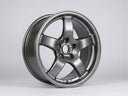
When it comes to the genuine wheels of the R32 GT-R, everyone knows the forged 16-inch wheels made by Washimaya. While they have been deified to some extent, to be frank, those wheels were never "ultra-lightweight." The true brilliance of those wheels lies in their "innovative design," which achieved that deep, curved spoke shape while still being strong forged wheels.
Despite being forged, they possessed that deeply sculpted, three-dimensional aesthetic beauty. That's what made them so cool. The persistence of the car manufacturer and the supplier back then still amazes me.
Why we chose a "two-stage evolution" instead of 17 inches
When considering updating the genuine wheels to suit modern road conditions and tire circumstances, if we were to follow a "straightforward evolution" from 16 inches, 17 inches would normally be appropriate.
However, more than 30 years have passed since the R32 was born. The standard size for modern sports cars has completely shifted from 17 inches to 18 inches. That's why, if we were to redesign them now, it wouldn't be the original 16 inches, nor would it be the next size up, 17 inches. The 18-inch wheels, representing a "two-stage evolution" that can maximize the potential of modern brakes and tires, are the most reasonable and inevitable choice.

The "Forging Wall" that analytical software cannot overcome
So, how do we make those 18-inch wheels? "Since the genuine wheels were forged, the 18-inch wheels should also be forged." We initially thought so too. However, we encountered a huge obstacle here.
To reproduce that "deep, curved spoke shape" unique to the genuine wheels in 18-inch forged wheels, a super-large, high-pressure forging press machine of the 7000-ton class would actually be required. The idea that "the latest analytical software can somehow manage it" is a delusion of people who are not familiar with the actual manufacturing process. The physical hurdles of forming cannot be overcome by data on a PC alone. If we were to create this from scratch using forging, the cost would be enormous, and it would be impossible to offer it at a realistic price.
"Flow Forming Method" – A Modern Breakthrough
That's where we at GENUINE TREND REPRODUCTION (GTR) focused on a new technological innovation in modern wheel manufacturing.
30 years ago, the common perception might have been that "cast wheels are heavy and weak." But that's no longer the case. This is because a technology called the "flow forming method" has emerged, which involves forming the rim part by powerfully drawing it out with rollers, even though it's a cast wheel. This method makes the metal structure dense like forged wheels, allowing for lightweight and high performance close to that of forged wheels, while still utilizing the "design freedom (reproduction of those deep curves)" unique to cast wheels.
Just because the genuine wheels were forged, there's no need to thoughtlessly stick to forging. For the purpose of "preserving that deep design, converting to 18 inches, and having the lightness and strength to withstand modern driving performance," modern casting technology using the flow forming method was the most logical and best approach.
This 18-inch wheel embodies the passion of that era's design, backed by 30 years of technological innovation. It is an "inevitable update" to make your R32 run safely and beautifully on modern roads.
Share:


